




Today's Reason to Drink
Articles

News from the Front
Humanity stands at a crossroads.
I’m not talking about the madness in the Middle East—we’ve been doing donuts at that particular intersection for millennia—I’m talking...

In Praise of the Spritzer
As a woman, there’s not a cocktail on this Earth that I would feel any kind of shame for ordering.
Blowjob shot? Hit me, I’m...

A Brave New Dawn
It is generally assumed that the drunk is an animal of the night.
That we are to be found prowling the dark jungle of dives...


Wino Wisdom: Issue 64
“It’s not day drinking if you’re still up from last night. It’s second-wave night drinking.”
Unknown gent, who probably spent too much time in school,...

Drunkard of the Issue #64: Lydia Lunch
Lydia Lunch knocks a backhand of defiance into the face of the status quo like a shot of tequila spat into a gaping wound....

Booze of the World: All in with Ten High Bourbon
“A True Bourbon.”
That was once the emphatic claim of Ten High, back when it was a cheap but honorable straight bourbon whiskey. Today it...

The United Altered States
“The United States of America” has always been a misnomer. “States of America,” yes. “United?” Well…
In the sense that we’re all stuck together, that...

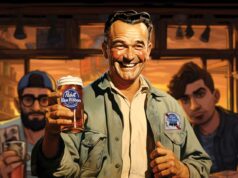
The Strange Case of PBR
Pabst Blue Ribbon is a beer of simple pleasures.
It didn’t actually win a blue ribbon, but no one buys Pabst for its award-winning pedigree....

You Know You’re a Drunkard When… #64
Cenosillicaphobia is fear of an empty glass, and you’re getting damned angry at the snickering bartenders who find it amusing when you have a...

The Future of Boozing
Two decades ago, this magazine squinted into the hazy horizon and coughed up a slew of wild predictions about the future of drinking.
So, how’d...

Community and Freedom
Social media is a benjo ditch, an open sewer where gondoliers named Zuckerberg, Musk and Gates spend the day steering fancy Venetian canoes.
Every day,...

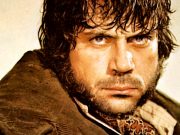
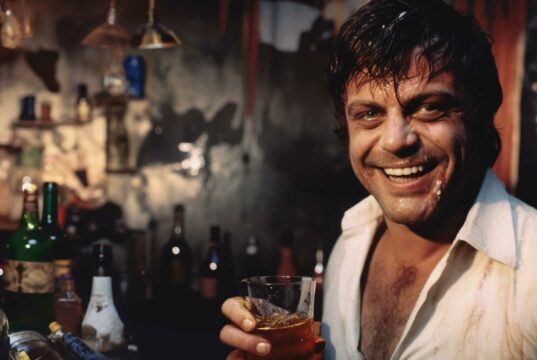
Oliver Reed: Profile in Drinking Courage
In the pantheon of history’s heroically great drinkers, there is a special place reserved for the British actor Oliver Reed.
Reed’s alcohol consumption was truly...
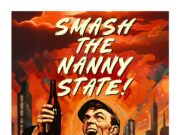
Plastered Propaganda Poster 64: Smash the Nanny State
Get a mini or large polycanvas poster right here.

The Ghost in the Machine
MDM: Before we start, let’s have a Papa Doble.
EH: Good idea.
You and master bartender Constantino Ribalaigua Vert conspired this cocktail, didn’t you? At La...


Tipping Points
A Blast from the Past
Wealthy Americans adopted the practice of tipping as they traveled about Europe in the mid-19th Century. At the time, trans-Atlantic...
Postcards from Skid Row #64
Drinking in a Church Yard
The idea is anonymity
Or peace,
As the dead only punch
Their hands through the sod
In the imagination
Or the cheap seats I run...
Columns and Regular Features


Booze-Soaked Fiction


Adventures with Alcohol


All the Pretty Pictures


How To Articles


Drunkards of the Issue


Clash of the Tightest


The Great Drunks


Historical Hooching